- Why Stake Engine Became Just Engine
- A Slot as a Set of Pre-Built Scenarios
- What to Account for Before Release
- How Much the Developer Gets
- Who Collects Most of the Turnover
- Where the Pretty Passive-Income Story Ends
- The Funnel Eddie and His Team Built
- An Assembly Line on a Single Skeleton
- The Battle for Streamers, and Where the 96% RTP Goes
- A Funnel Built on Survivorship Bias, and the 50–100 Spin Trap
- The Myth of the “Well-Fed” Slot and the Bonus Buy Illusion
- How to Approach Engine Games without Rose-Colored Glasses
- The Mystery Bonus and the Trainwreck Effect
- One Integration, Many Storefronts
A Steam for online casinos from the people behind Stake: why every slot on Engine drains your balance the same way
Shipping a slot takes more than drawing some reels and bolting on a Spin button. You need the math, a backend, compliance checks, and deals with the sites where anyone will actually see the game.
Engine Studio (formerly Stake Engine) offers small teams a different route: the developer builds the game, the platform reviews and hosts it, and the creator takes a share of the gaming revenue. There’s no need to run your own game server.
It sounds like Steam Direct for casinos. Except that instead of selling copies, you get a cut of what the bets bring in – and success depends as much on your shelf position as on the game itself.
Engine 🤝 @rainbetcom
— Engine (@enginedotio) November 7, 2026
Why Stake Engine Became Just Engine
The platform opened to outside developers in April 2025. In September 2026, Stake Engine was renamed Engine and announced it was moving beyond Stake: its games are now offered to other operators through a shared integration.
For Stake co-founders Ed Craven and Bijan Tehrani, it’s one more business line alongside the casino and the streaming platform Kick. For developers, it’s potential access to several sites instead of one.
Today Engine has three distinct parts:
- Studio – building, uploading and publishing games.
- Integration – plugging the catalog into other casinos.
- Insights – public statistics on games and studios.
But wide distribution and Stake exclusivity come with different payout terms.
Engine games are now live on @yeet!
“Their community is fun and very active, and we can’t wait for their players to experience our games.” – Hayden, Head of Operations at Engine. https://t.co/x2xI03NVmY
— Engine (@enginedotio) November 6, 2026
A Slot as a Set of Pre-Built Scenarios
Engine separates the math from what the player sees. The key point: on each spin, the server picks from a set of outcomes prepared in advance, each with a fixed probability. It doesn’t play out the slot’s full logic from scratch.
- The developer defines the rules. Paylines, cascades, bonus rounds and multipliers. The official Math SDK uses Python; you can use your own tooling as long as the output matches the platform’s format.
- They prepare a set of outcomes and their weights. One file holds the round scenarios; another holds each scenario’s selection probability and payout. That makes it possible to calculate the exact RTP of the published model.
- They upload the math. A single mode needs at least three files: index.json, a CSV table, and a .jsonl.zst scenario file. At publication, the platform checks that the payouts in the scenarios match the table.
- They build the front end. The official Web SDK is based on Svelte and PixiJS. It’s optional: any other stack works, provided the final build runs as a static site with an index.html.
- During play, the server picks the outcome. The interface receives the round’s events over the API and shows the reels, cascades and bonus rounds in the right order.
Pre-built scenarios don’t mean a result has been assigned in advance to any particular player. What stays random is the selection of an outcome according to its weight. And RTP describes the mathematical expectation over the long run, not a promised return for a single session.
What to Account for Before Release
- Every bet is independent. Engine requires stateless games: no progressive jackpots, no progress carried over between bets, no gamble (double-up) features and no early cash-out.
- Stake.us requires Social Mode. This mode has its own rules for wording and interface. For example, bet becomes play and cash becomes coins. Simply removing the dollar sign isn’t enough.
- The review covers both the game and how it’s presented. Reviewers look at whether it works, whether the rules are clear, the quality of execution, and the rights to the assets. An AI review is available for self-checking, but the decision to publish rests with the Engine team.
The platform takes on part of the technical work, but it doesn’t waive the legal requirements of any given country. Being able to upload a game is not the same as being allowed to distribute it in every market.
Engine games are now live on @500Casino!
Newton from 500 Casino said they’re “very happy for Engine to be featured across our extensive Slots portfolio,” and our Head of Ops Hayden added, “Really happy to have Engine up and running on 500 Casino. They’ve got big plans, and we’re glad to be part of them.”
— Engine (@enginedotio) November 4, 2026
How Much the Developer Gets
Engine has no single flat rate of “10% for everyone.” According to the current documentation, there are two payout models and two distribution options.
Payout terms
| Distribution | Profit Share | Guaranteed |
|---|---|---|
| Only on Stake – the game is exclusive to Stake | 10% of actual GGR | 7.5% of expected GGR |
| Stake + Engine network – the game goes out to the network | 5% of actual GGR on each site, Stake included | 3.75% of expected GGR |
The payout model is set at the team level. After the first release, it can be switched starting the following month. Distribution, on the other hand, is chosen separately for each game and locked in at launch.
GGR (gross gaming revenue) is total wagers minus player winnings. It’s a gross figure, not the casino’s bottom line – operating expenses come out later. The same goes for the studio’s cut: salaries, art, marketing and taxes still have to be paid out of it.
Profit Share depends on how the game actually performs. Guaranteed is calculated as “turnover × (1 − RTP),” so the results of individual winning rounds don’t change the base it’s calculated on. But without turnover, there’s nothing to split under this model either.
Example
With $100 million in turnover and an RTP of 96.5%, expected GGR is $3.5 million. For an Only on Stake game, that’s $350,000 under Profit Share – but only if actual GGR matches the expected figure – or $262,500 under Guaranteed. All amounts are before the developer’s costs and taxes.
Expected GGR: $3,500,000. Ten percent of that is 0.35% of turnover. Profit Share will match the table only if actual results match the model.
| Option | Payout |
|---|---|
| Stake only · 10% | $350,000 |
| Stake only · 7.5% | $262,500 |
| Network · 5% per site | $175,000 |
| Network · 3.75% per site | $131,250 |
So 10% of GGR at a 96.5% RTP works out to an average of 0.35% of turnover – not 10% of all the money wagered. The actual payout depends on the model, the distribution and the terms of the calculation.
Engine (@enginedotio) just landed on Thrill 👀
It opens the door to more games from independent studios.
First up: @massivestudios_ and Knucklehead Syndicate.
Meet the new arrivals 👇
https://t.co/Mjshc8aJpz https://t.co/gvd2K5JqSI— Thrill.com (@Thrill_com) November 2, 2026
Who Collects Most of the Turnover
By the platform’s own figures, here is what went through Engine between October 8 and November 6, 2026:
- Turnover: $3.56 billion in bets.
- Bets: 2.08 billion.
- Accounts: 671,388 players. The platform counts an account at each operator separately.
- Catalog: 7,056 games and 1,932 publishers that accepted bets during the period.
Studios ranked by turnover over the same period
| Studio | Games | Turnover |
|---|---|---|
| Valkyrie | 24 (38.1% of turnover) | $1.357B |
| Paperclip Gaming | 72 | $254M |
| Twist Gaming | 49 | $213.5M |
| Donut Gaming | 20 | $204.8M |
Valkyrie alone accounts for about 38.1% of the entire platform’s turnover. The distribution is plainly lopsided: a market-wide average says little about a new team’s chances.
In September, Ed Craven reported more than $90 million in total payouts to publishers. That is a statement from Stake’s co-founder, not an independent audit.
Turnover in the rankings is not what a studio earns. The public Insights dashboard shows bets and activity, but it doesn’t confirm any specific payout to a developer. So you can’t get to “millions a month, net” from the rankings with a single multiplication.
Top 10 Teams powered by Engine 📈
@ValkyrieXStudio leads the way with @PlayPaperclip and @donut_slot rounding out the Top 3!
@metagamingslots, @coreffect,Twist (@JuicePlayGames), @MavSlots, @PlayUppercut, @Colorful_Play and Terminal Games round out the Top 10!
What is your recent favourite release from these teams?
— Engine (@enginedotio) November 9, 2026
Where the Pretty Passive-Income Story Ends
- Publishing a game and finding an audience are two different jobs. Engine itself warns that a good product still has to be made visible. Only games rated 3★ make it into the New Releases, Slots and Burst Games sections. There’s paid promotion, creator partnerships and integrations with Kick streamers. Nobody promises an automatic stream of players after release.
- Under Profit Share, a loss can roll over into the months that follow. If payouts to players exceed bets, GGR goes negative. Under Engine’s rules the developer doesn’t pay out of pocket, but the deficit is carried forward and offset against future positive results. Until it’s cleared, there may be no payouts at all. One big win can halt a studio’s payouts for more than a month.
- Going out to the network has a price. A network game gets a lower revenue share and fewer promotion opportunities on Stake. Meanwhile, each third-party operator decides for itself whether to add the game to its catalog. Distribution is locked in at launch: a released Stake exclusive can’t simply be switched over to the whole network later.
The Steam comparison holds in one important sense: a small team gets a ready-made path from its own game to a site with players. There’s no need to build the entire infrastructure from scratch or negotiate every technical step separately.
But it’s still a business inside someone else’s platform. The platform sets the publishing rules, the payout terms and the access to promotion. And the leaders’ huge turnover guarantees nothing to the next indie developer.
Engine makes it easier to release a game. Creating demand for it is still the developer’s job.
We’ve been dropping new features every 3 days this month — and still found time to integrate @enginedotio + @JuicePlayGames faster than your favorite casino ⚡️
10+ new providers. 100+ new games. Live now.
Which one’s your favorite? Drop it below with your username 👇 https://t.co/Bx2cILAfcS
— GAMBA (@gamba) October 20, 2026
The Funnel Eddie and His Team Built
At its core, it’s a farm of thousands of streamers who are obliged to spin Engine-powered slots for a flat fee.
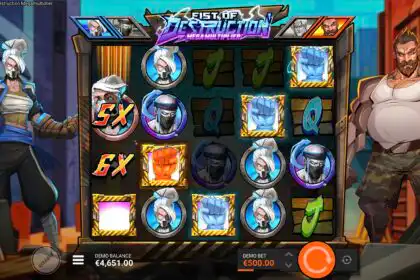
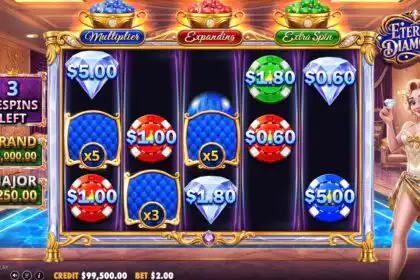
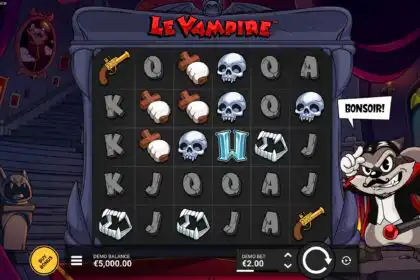
Browse the catalog of any modern crypto casino and you get an impression of enormous variety: dozens of new studios – Paperclip Gaming, Titan Gaming, Twist Gaming, Massive Studios and hundreds of small indie teams – churn out flashy releases every week. But play even a hundred spins and a strange sense of déjà vu sets in. The graphics and characters differ, yet your balance behaves in exactly the same way: a flat, lifeless base game, rare and empty bonus rounds, and the feeling that the slot is running in vacuum-cleaner mode.
It isn’t paranoia, and it isn’t a “bad run.” All these games share a common technical foundation – the Engine platform – and their extreme volatility is the product of cold mathematical calculation and a very particular business model.
Major brands will soon have no choice but to plug in @enginedotio studios if they want to stay on trend, attract and retain players. Just look closely – most of the current streamer clips with huge wins are happening in the exact games and providers they supply. And hell yes, they’re now creating serious competition in the market!
— AffStroy (@AFFstroy) November 4, 2026
An Assembly Line on a Single Skeleton
Engine isn’t a standalone development studio. It’s an open build-it-yourself platform (an RGS plus SDKs) on which more than 3,700 slots have already been released.
Traditional providers spend years developing their own proprietary algorithms for generating reel strips. Inside Engine, things are simpler: developers are handed a ready-made math toolkit in Python (the Math SDK). Instead of a complex simulation of live reels, most teams use precomputed outcome tables – lookup tables, or weight tables.
How it works in practice. The developer generates millions of ready-made spin scenarios (“books”) and assigns each a probability weight. Rather than spend months fine-tuning the balance, assembly-line studios take the basic math templates straight from the SDK documentation, stretch new artwork and animations over them, and ship the game.
The result: dozens of slots from different studios share an identical mathematical skeleton. You switch slots, but you keep spinning the same payout distribution table.
The Battle for Streamers, and Where the 96% RTP Goes
Why don’t Engine studios make gentle, comfortable slots? The answer lies in the economics of the platform itself. Every developer in the ecosystem earns a percentage of players’ turnover and losses (up to 10% rev share). With thousands of games in the catalog, a calm, medium-volatility slot simply goes unnoticed – it brings in no traffic.
To survive in the catalog, a slot has to land in streamer clips on TikTok and YouTube Shorts, and in the “Big Wins” feed. And for that, it needs a loud max win on the cover: 10,000x, 50,000x, even 500,000x.
But total return to player (RTP) is capped at the standard 96%. To build the possibility of a 500,000x hit into a game at that RTP, the mathematicians have to quite literally burn out the middle and bottom of the paytable.
The death of the base game. According to simulations of Engine slots, even with the paid boost (Ante Bet) switched on, around 90–94% of all spins are completely empty (0.00x) or return less than the stake.
No safety cushion. In familiar slots such as Pragmatic Play’s, the math is built around keeping the player in the game: the slot regularly tosses out line wins of 5x–25x, letting you sit in a session for a long time. In Engine, those in-between payouts are cut out, and the money saved is moved into the tail of the distribution for the sake of rare jackpots.
Same RTP, a different session
| Engine | Pragmatic Play | |
|---|---|---|
| What the math is for | Viral marketing: rare, giant wins for social media and streams | Balance retention: a long session and a smooth ride |
| Base game | 90–94% empty or losing spins, almost no mid-sized line wins | Regular hits of 1x–20x that keep the bankroll afloat |
| Average bonus round | Binary: 75–85% of bonuses pay 3x to 30x, a handful shoot high | Frequent returns of around 30x–80x that let you keep playing |
| Median bankroll left after 100 spins | About 18% of the starting budget | About 68% of the starting budget |
A Funnel Built on Survivorship Bias, and the 50–100 Spin Trap
It’s at the intersection of viral marketing and extreme variance that the main trick of modern crypto slots is born – call it the “curiosity tax.”
The scheme works flawlessly and requires no manual rigging by the casino.
- A showcase of other people’s wins. A player sees a slick replay in the casino’s feed or on a stream, in which a new slot from, say, Paperclip or Titan pays out 10,000x. Survivorship bias kicks in. The brain sees one winning ticket and concludes the slot is “paying,” without noticing the tens of thousands of burned deposits left off camera.
- The blind spot of a short session. The player drops in to “check out” the slot for 50–100 spins at their usual stake. But the real frequency of a bonus round in an Engine base game averages 1 in 300 to 1 in 450 spins. Over 50–100 spins, the probability of merely seeing three scatters is roughly 20%, and the chance of landing a real profit inside that bonus drops to a couple of percent.
- Topping up the common pot. After 100 spins in an empty base game, 9 out of 10 players have lost 70–90% of their budget and leave disappointed. It’s their small deposits that make up the prize pool from which one random lucky winner will take home a 15,000x screenshot.
On paper, the rules are followed: add up 99 players who lost nearly everything and one who caught a huge multiplier, and the average RTP really does come to 96%. But for an individual who dropped in to unwind for half an hour, the real median return is three to four times lower than advertised.
Your chances of seeing a bonus
The frequency in the base game averages 1 in 300–450. With the Extra Chance / Ante Bet boost, it tightens to 1 in 80–120.
100 spins at a bonus frequency of 1 in 450: the chance of simply seeing one is 19.9%. Over 50–100 spins at a frequency of 1 in 300–450, that’s about 20%, and the chance of landing a real profit inside the bonus drops to a couple of percent.
The Myth of the “Well-Fed” Slot and the Bonus Buy Illusion
When a player realizes the slot has given nothing in 100 spins, they often fall into one of two traps.
Trap one: “I’ve fed it, so now it has to pay.” After 300 empty spins, it feels as if the slot has “filled up” with money and you can’t walk away. But technically, Engine’s architecture has no memory, no piggy bank and no payout cycles. Every spin is an independent draw from the weight table. If the odds of a good outcome are 1 in 1,000, then after 400 empty spins the probability of hitting the bonus on spin 401 is exactly as low as it was on the first. The slot doesn’t warm up – you’re simply waiting, statistically, to land by chance on a rare line of code.
Trap two: “There’s no point spinning the base game, I’ll just buy bonuses.” Engine games really are designed around the Bonus Buy and Super Bonus buttons (at 100x–500x the stake). But buying the feature doesn’t tilt the math in your favor; it only compresses the time it takes to lose. In 75–85% of cases, a bonus bought for 100x returns between 3x and 30x, with a median return of about 19x. Instead of gradually handing over $80 across 15 minutes of base-game spins, you hand over the same $80 in 40 seconds of one empty bonus round.
How to Approach Engine Games without Rose-Colored Glasses
The Engine catalog wasn’t built for a quiet evening with a beer. It was built as an ultra-fast, all-or-nothing lottery. Understand the mechanics in advance and you can save both your nerves and your balance.
- Forget 50–100 spin sessions in the “bare” base game. Without the bonus-chance boost switched on, slots on this engine sit in an artificial drought. With the boost on, bonus frequency tightens to 1 in 80–120 spins – the only way a short session makes any sense at all.
- Divide your usual stake by three or four. If your budget in classic slots is sized for 100 spins, then for Engine slots the same amount needs to stretch across at least 300–400 spins. Otherwise variance will eat the bankroll before you see a single bonus.
- Pick providers to suit your goal. If what you want is to play for fun over a short stretch, see a lively base game and have a decent chance of ending the session in profit without buying features, releases from Print Studios and Relax Gaming, or medium-volatility slots (3/5 and 4/5) from Hacksaw Gaming, treat your balance far more fairly.
Engine-based slots don’t cheat in the code. They use a far subtler trick: selling the dream of a rare, million-dollar win at the expense of thousands of players who dropped in “just for a hundred spins.”
The Mystery Bonus and the Trainwreck Effect
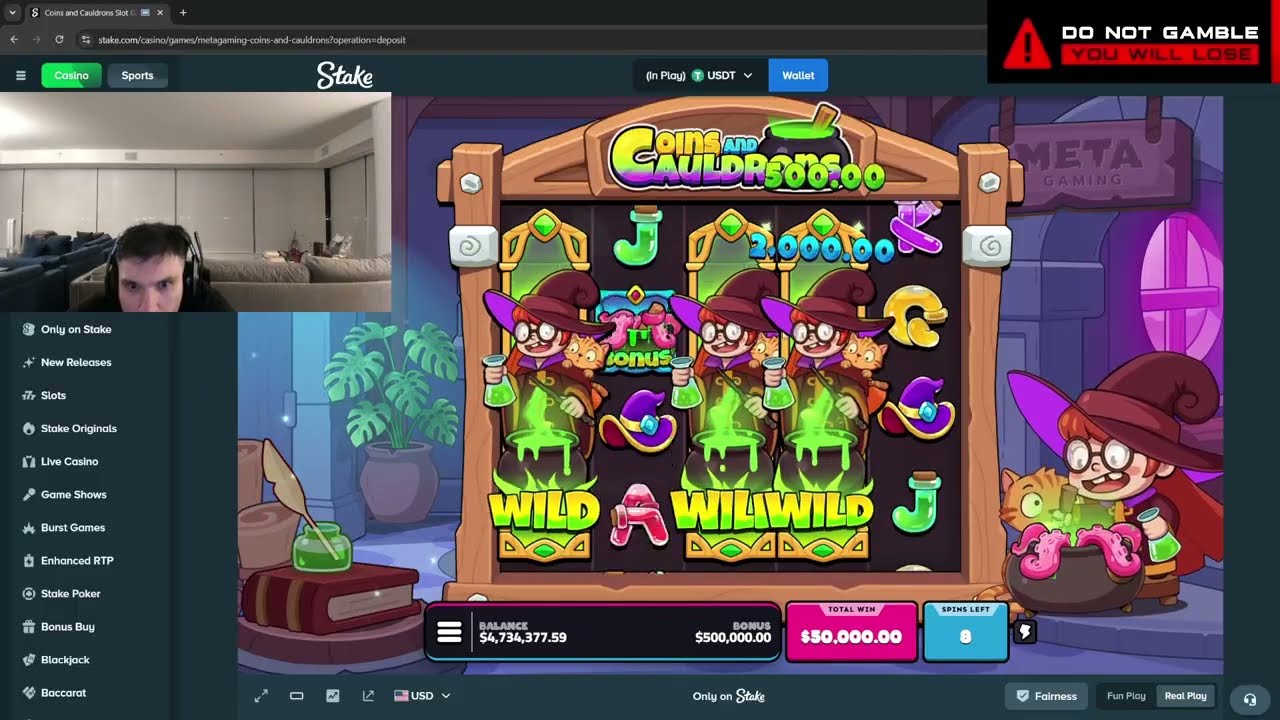
The loudest ad for the catalog is one man’s Kick stream. In June 2026, Trainwreckstv turned a single $500,000 Mystery Bonus buy on Coins and Cauldrons into a $50 million max win, and that slot is the debut of Meta Gaming, a studio working on Stake Engine. A month later he repeated the $50 million figure on Red Strike, a Valkyrie game. In early November, a $375,000 Mystery Bonus on Hellborn returned $22.5 million.
The Mystery Bonus is a bonus buy where you don’t know what you’re buying. On Coins and Cauldrons it costs 500x the stake and hands out a three-, four- or five-scatter round at random. The odds are roughly 60%, 30% and 10%. Only the last one, the “hidden” bonus, carries the potential you see in the clips. The idea comes from Hacksaw Gaming, whose hidden five-scatter rounds could only be hit in normal play and were never for sale. Engine studios sell the lottery ticket for it.
Do the math at 10%. On average you need ten buys, or 5,000x your stake, to see one hidden bonus. About a third of the time, ten buys produce none. And getting there guarantees nothing: one player counted “23 bonuses before my first Hidden bonus and it paid 2.67x.”
The difference between the streamer and the viewer is bankroll, not luck. Trainwreckstv plays a $1,000 base bet, so each buy costs him half a million dollars, and he can absorb long losing runs: in April he reportedly went through more than $10 million before the big wins came. A viewer at a $1 stake pays $500 per buy. Ten buys cost $5,000, with a one-in-three chance of never even seeing the round from the clip.
It’s the same paytable for both of them. The clip shows the tail of the distribution; the viewer lives in the middle of it. No rigging is required, although every record sets off a wave of “staged” accusations in the comments.
One Integration, Many Storefronts
The point of September’s rebrand was to ship an already assembled catalog far and wide. By early November, Engine’s account had publicly announced launches on Gamba, Thrill, 500 Casino, Yeet and Rainbet. The cards repeat one formula: new studios, a batch of slots, and the slogan build, launch, earn. To the player, it looks like a fresh provider inside a familiar site. For the platform, it’s one contract and one monthly invoice instead of a separate integration with each studio.