Every player looking to win against the casino faces the same challenge: how to get the best possible result. That means minimizing losses on one hand and maximizing potential wins on the other. The set of best decisions across every possible game situation is what we call Basic Strategy.
Nearly every source out there will tell you that Basic Strategy gives the player the best result. Make the right call in every situation – good or bad – and the outcome should follow. In practice, it often doesn’t. So why does playing strictly by the book so often fail to deliver? To answer that, we need to look at what basic strategies are actually built on.
What Is Basic Strategy
Basic Strategy is a set of optimal decisions. Each decision is chosen because it produces the best average result – the highest expected value.
Expected value depends on two things: the probability of an event and its outcome – how much you win or lose. Every event in a casino game is random. You can’t predict the result of any single event – you can only describe it using probability and expected value. These are the two fundamental characteristics of any random event.
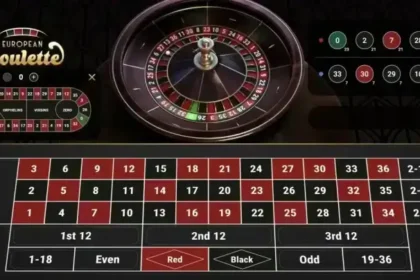
On roulette, any of the 37 numbers can come up on any spin – each one equally likely at 1/37. The next spin is independent and unpredictable. But knowing each number’s probability, you can predict with good accuracy how often a given number will appear over 100,000 spins – and with even better accuracy over 1,000,000.
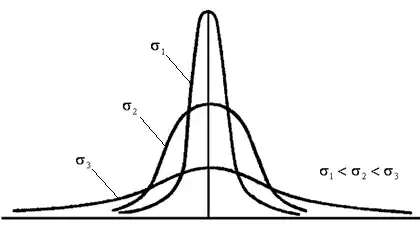
Take ten roulette spins and you probably won’t see an equal number of reds and blacks, even though their probabilities are equal. Over a much larger sample, though, the counts converge rapidly. The same applies to game results: actual outcomes approach expected value only as the number of repetitions grows large.
Basic Strategy in Blackjack
The most widely known example is Blackjack Basic Strategy. A simple table covers every starting hand – your two cards against the dealer’s upcard – and tells you what to do: hit, stand, split, double, or surrender. Each action leads to a clear outcome: win a bet, lose a bet, push, or get half back on surrender. Each outcome has a probability, which makes it possible to calculate the expected value of every option. The option with the highest expected value is the “correct” play.
The problem is that most books and strategy cards just show the table – without the numbers behind it. They don’t tell you the expected value of the optimal play, or how much better it is than the alternatives. Some decisions win by a wide margin. Others are almost a coin flip. Without seeing the actual values, a player has no way to tell the difference.
Why Basic Strategy Fails in Practice
Basic Strategy is built on theoretical probabilities and expected values – and those only hold true over an infinite number of events. In reality, almost no player gets anywhere close. Most are limited by their bankroll. Even treating every session as part of one long game, the total number of hands is far too small.
A player who visits the casino a few times a month plays a countable number of hands. Each specific starting combination – say, 15 against a dealer 9 – comes up a limited number of times. The requirement that each combination repeats often enough to approach its theoretical probability is simply unachievable. The game doesn’t match the mathematical model, and Basic Strategy loses its power.
Basic Strategy works in the realm of large numbers – over a long horizon, without resource constraints.
When the Optimal Decision Is Not the Best One
Here’s the deeper point: in any casino game, when a player is seriously short on chips or time, the decision with the highest expected value is not always the smartest one.
In Blackjack, if you’re on your last bet holding 15 against the dealer’s 9, Basic Strategy says hit. It has a higher expected value than surrender’s fixed −0.5. But that calculation assumes you’ll face this situation thousands of times. You won’t – this is your last hand. Surrender saves half your stake for certain. Hitting is better on average across infinite hands, but you only have one.
The same logic shows up in Casino Poker. When you hold a strong combination and the dealer is unlikely to qualify, the Insurance bet has a positive expected value – and since it scales with bet size, the math says go big. But if “big” means your entire remaining stack, one bad outcome ends your session. The probability of losing is under 50%, but it’s far from negligible. And while these favorable situations come up regularly, they don’t come up often enough to act as an infinite sample.
The Lottery Example
A lottery winner is offered a choice: take the prize now, or roll a die – numbers 2 through 6 double the prize, a 1 means losing it all. The odds heavily favor rolling (5/6 versus 1/6), and expected value agrees:
- Take the prize: EV = 1 × 1.0 = 1
- Roll the die: EV = 2 × 5/6 + (−1) × 1/6 = 9/6 = 1.5
But this isn’t one trial in a long series – it’s a one-off event, unique in both nature and stakes. It doesn’t belong in the same framework as a repeating random event.
The takeaway: use every edge available, but only when the situation repeats often enough to behave like part of an infinite set. When it doesn’t, expected value alone won’t guide you to the right answer.
The Laws of Probability in the Casino
Individual casino events are random and unpredictable. But taken as a whole – repeating day after day, indefinitely – they follow strict distribution laws. Results become predictable and converge toward expected value as volume grows. This is the foundation of every casino’s mathematical model.
Probability laws apply equally to everyone at the table. Individual players, all players combined, and the casino itself as a business – all are governed by the same math. These laws are what protect the casino’s profitability and its existence as a business.
Casinos Face the Same Risk
The risk of operating outside the mathematical model isn’t exclusive to players – casinos face it too. Betting limits set too high, reserves that are too thin, low traffic, or a few VIP players whose results dominate the casino’s bottom line – any of these can push the casino into territory where expecting average results over a day or a month is unrealistic.
Running a consistently profitable casino requires more than favorable game rules. It takes balanced traffic, betting limits backed by real assets, adequate reserves, and solid operations – management, marketing, and security. A casino with an unstable visitor mix and limits it can’t actually support operates under elevated risk. The mathematical edge built into the game rules loses its practical meaning, and results can swing from windfall profits to an inability to cover payouts.
A casino that doesn’t conform to its own mathematical model is in the same position as a player betting their entire bankroll on a single hand: the outcome becomes unpredictable, and the survival of the business may depend on one random event.